
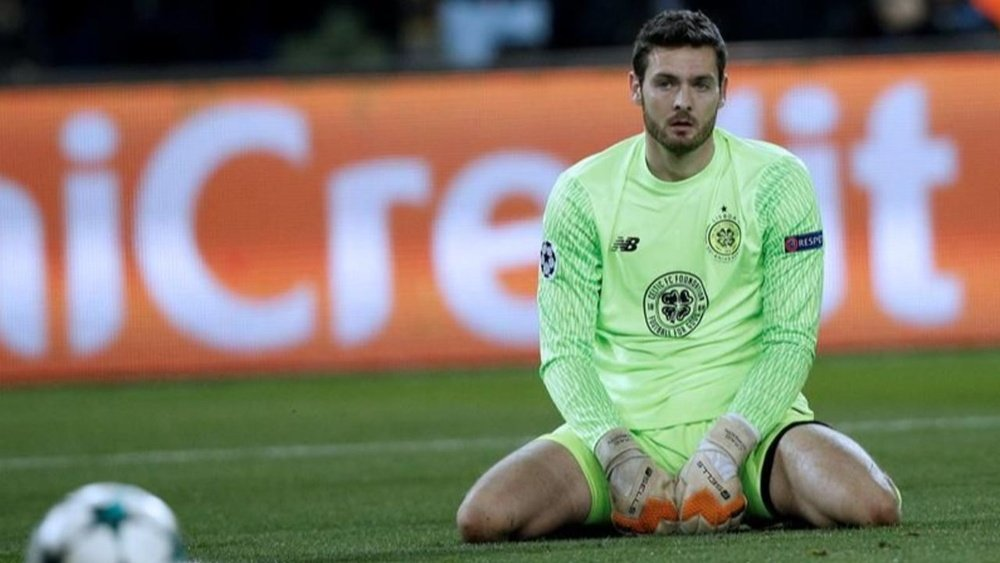
At 43 years of age, Craig Gordon is preparing for what could be the crowning moment of one of football’s great stories of resilience.
Included in Scotland’s squad for the 2026 World Cup, the veteran goalkeeper is on course to become the second-oldest player ever to feature at the tournament.
Only Egypt’s Essam El Hadary, who famously played at the 2018 World Cup aged 45, would stand ahead of him. Gordon would move past Colombia’s Faryd Mondragon, who set the previous benchmark at 43 during Brazil 2014.
For a player whose career once appeared over, it would be a remarkable achievement.
From Hearts prodigy to British record-breaker
A product of the Heart of Midlothian academy, Gordon quickly established himself as one of Scotland’s brightest talents.
His commanding presence and outstanding reflexes earned him a reputation as one of the finest goalkeepers in British football, helping Hearts enjoy memorable European nights during the 2003/04 UEFA Cup campaign.
His performances eventually secured a move to Sunderland in 2007 for a fee of around €10.8 million, making him the most expensive goalkeeper in British football history at the time.
The move promised even greater things, but fate had other plans. A succession of serious knee injuries restricted him to 95 appearances across six seasons and eventually forced him out of the game for more than two years. Many believed his career at the highest level had come to an end.
The comeback nobody expected
Instead of fading away, Gordon produced one of football’s most remarkable revivals.
In 2014, he joined Celtic on a free transfer and immediately rebuilt his reputation. He regained his place in the Scotland squad, won multiple domestic honours and re-established himself as one of the country’s leading goalkeepers.
His return was about more than trophies. It was proof that determination could overcome years of physical setbacks and uncertainty.
Six years later, Gordon completed the circle by returning to Hearts, the club where everything had begun. Even into his forties, he has continued to perform at the highest level of Scottish football, combining experience, leadership and remarkable consistency.
A Scotland career built on resilience
Gordon made his Scotland debut in 2004 after progressing through the youth ranks and has since earned more than 80 international caps.
His international journey mirrors his club career: periods of success interrupted by cruel injury setbacks, followed by unlikely comebacks. Between 2010 and 2014 he disappeared from the national-team picture altogether, only to fight his way back and become a key figure once more.
Now, his selection for the 2026 World Cup represents the latest chapter in that extraordinary story.
If Steve Clarke hands him even a single minute on the pitch, Gordon will secure his place among the oldest players ever to appear at football’s biggest tournament, trailing only El Hadary and surpassing Mondragon.
Defying time
Statistics alone cannot fully explain Craig Gordon’s legacy.
His career has been defined by perseverance, loyalty and an unwavering refusal to surrender to adversity. In an era where goalkeepers are extending their careers longer than ever before, he remains one of the finest examples of longevity in modern football.
At 43, Gordon is not simply chasing another appearance for Scotland. He is chasing history, proving once again that resilience can be just as powerful as talent.