
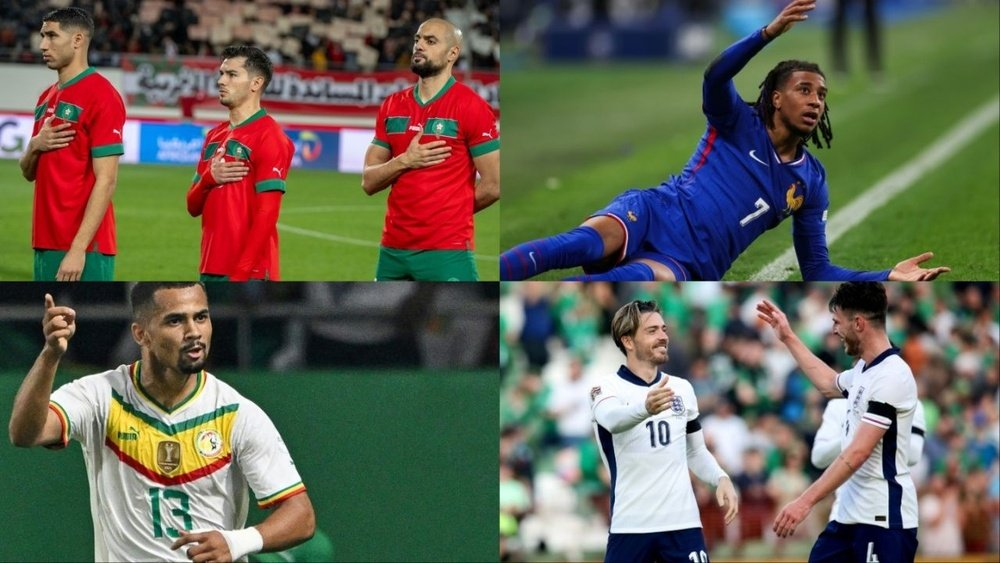
From dual nationality to pivotal career decisions, the 2026 World Cup highlights the stories of those representing a nation other than their place of birth.
The 2026 World Cup is set to be a landmark tournament. As the first to feature 48 national teams and the first to be staged across three host nations—the United States, Canada, and Mexico—it represents a truly global spectacle, not just in its scale, but in the narratives it weaves.
Among the storylines expected to define the tournament, one captures the essence of the modern game better than any other: the rise of players born in one country who have become icons for another. This is no longer the exception; it is the new normal—a reflection of a world in constant motion, blending cultures and evolving identities.
Whether they were raised abroad, opted for a change of allegiance after years in youth systems, or simply followed their heritage, this is, in every sense, the World Cup of second homelands.
Roots in transit: The Europe-Africa axis
If one trajectory defines this phenomenon, it is the bridge between Europe and Africa—an unseen thread of family history and homecoming. Kalidou Koulibaly and Edouard Mendy, for instance, were born in France, yet their legacies are now inextricably linked to Senegal.
The Moroccan national team serves as perhaps the most potent manifesto of this multifaceted identity: Achraf Hakimi and Brahim Diaz were born in Spain, while Hakim Ziyech and Sofyan Amrabat were born in the Netherlands. Together, they represent a single flag.
Then there are the stories of intersection: Obite N’dicka and Seko Fofana, French by birth but Ivorian by choice, or Antoine Semenyo and Inaki Williams, who traded the European heartlands to become the faces of Ghana.
Europe: Shifting identities
You don’t always have to cross continents to switch jerseys; sometimes, a change in narrative is enough. Aymeric Laporte and Robin Le Normand were born in France but found their international home with Spain.
The English landscape is equally telling: Declan Rice and Jack Grealish both represented Ireland at youth or senior levels before switching allegiance. Conversely, Marc Guehi followed the opposite path: born in Ivory Coast, raised in England, and now a mainstay for the Three Lions.
Choosing who to be
Ultimately, it is a matter of identity. Michael Olise was eligible for several nations but pledged his future to France. Eduardo Camavinga was born in Angola and Marcus Thuram in Italy, yet today they stand united in the famous blue shirt.
The 2026 tournament will be the grandest in history, but its true resonance lies in these crossing paths and blurred borders. A national team is no longer defined solely by a birthplace; it is the culmination of journeys, heritage, and the choices that define a career.